The way in which graffiti is tackled in a district could be set to change.
Members of South Holland District Council’s policy development panel discussed a a plan to remove the graffiti element of its street art and graffiti policy – with officers saying that this issue is already addressed in another policy, writes Local Democracy Reporter Oliver Castle.
Officers put forward a proposal to create a standalone street art policy and said that the graffiti element should be removed because this is already regulated within its existing corporate enforcement policy.
The council currently has a combined street art and graffiti policy.
At a meeting on Tuesday, April 21, Coun Allan Beal (Conservative – Whaplode and Holbeach St Johns) questioned the proposal.
He said: “Taking graffiti out, I mean how could you have a policy on graffiti – other than removing it as fast as possible?”
But Emily Spicer, service director for communities and housing services, said that the issue was already addressed elsewhere.
She added: “We’ve got a corporate enforcement policy which I think would capture graffiti and the detail of how we would react or work through any graffiti issues.
“So I think that’s why they’re being split up in terms of the presentation this evening.”
Coun Paul Barnes (Independent – Fleet) also argued that it was difficult to make a distinction between what should be classed as graffiti and what should be defined as street art.
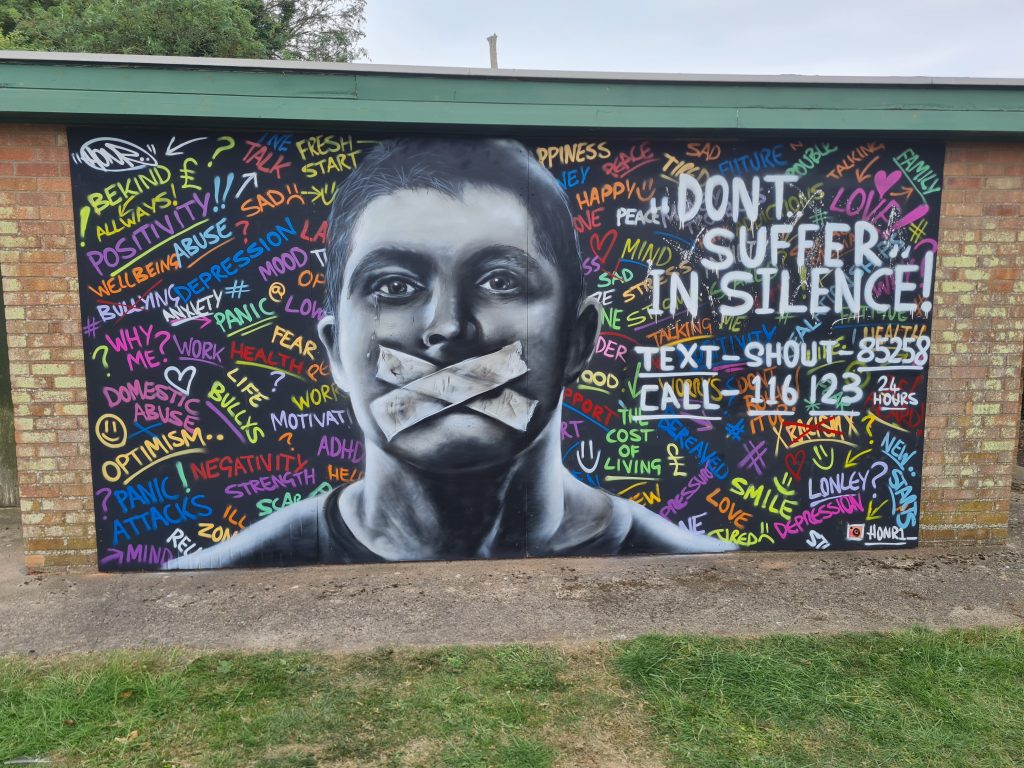
He added: “It’s difficult because in our parish, I’ve been encouraged to allow young people to decorate the back side of their changing rooms.
“I’m very angry because they were decorating somebody else’s brick wall as well.
“You’ve got to be very careful about how you do that.”
Coun Barnes went on to question whether street art should be allowed on private buildings.
He added: “If there’s a picture that appears on a wall, how do you determine that?
“I mean I can show you a picture I took in Tesco’s car park in Holbeach of what I would call some street art on the building.
“It’s actually advertising the company that’s there, so is that street art or is that graffiti? Do they need permission?
“It’s on their building but I can see it from the public. It doesn’t cause me any offence, it’s just there.”
Rachel Rowlett, cultural venues and creative arts manager, replied: “Where there’s urban art – spray art – quite often it’s been done through a workshop and the artist does education as part of the workshop to come to say ‘this is an authorised space ‘. That’s quite often part of the project.
“There’s also the planning process. So, if it’s a larger piece of art, it will have to go through the planning process as well.”
She also explained that if a picture is created on private land, it’s up to the landowner to give a person permission to do it, rather than the council.
SHDC officers will consider feedback from councillors and will bring the proposal back to a future meeting.