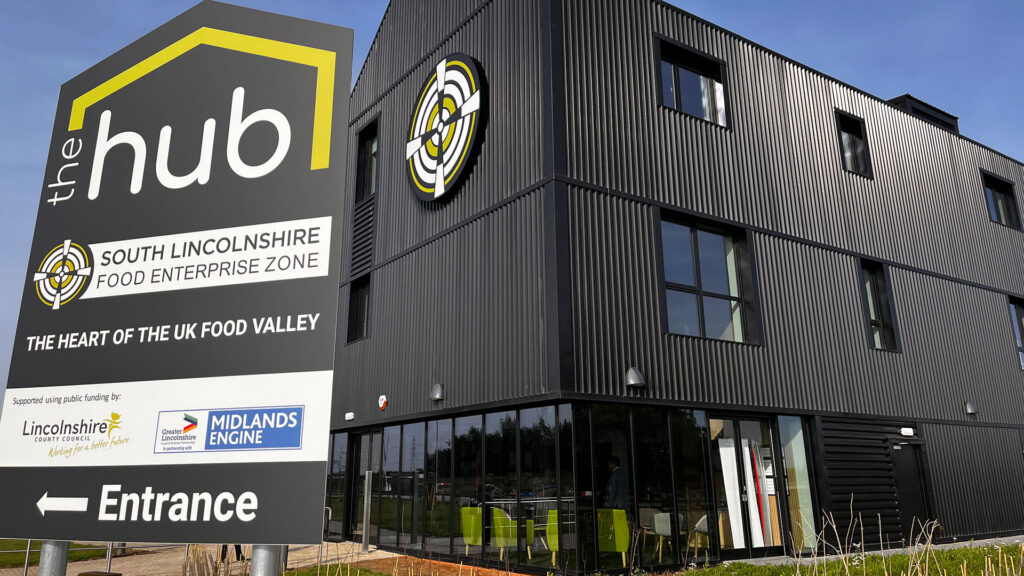
Investment into South Holland’s Food Enterprise Zone could see the county’s ‘Food Valley’ among the top ten global food clusters.
The potential for the county as a whole is huge, according to a report discussed by county councillors at a meeting this week.
The UK Food Valley, including South Holland’s FEZ, is a nationally recognised programme supporting food production, security, research and innovation.
Greater Lincolnshire produces 12 per cent of England’s food, handles 30 per cent of the UK’s total food logistics and has more than 75,000 skilled workers.
In the 20 years leading to 2030, the UKFV will have doubled its contribution to the economy, the report says.
Members of the county’s Growth Scrutiny Committee met on Tuesday to discuss the report.
“The farming sector has been through a decade of change and policy uncertainty,” the report says.
Two partnerships supported by the county council; the UK Food Valley and the Greater Lincolnshire Forum for Agriculture and Horticulture are crucial.
More than 70 large, international food companies and more than 4,500 small and medium enterprises are involved in the business across the county.
More than 75,000 people work in agriculture, food processing, wholesale and logistics, the report reveals.
Members of the committee agreed to further develop the proposal to make Greater Lincolnshire a testbed for implementing key recommendations from the Batters Review into Farming Profitability, published at the end of last year.
“Lincolnshire produces more than 19 per cent of England’s vegetables and fruit, 19 per cent of English sugar, 18 per cent of English chicken meat, with total agricultural output of around £2.5bn and above-average productivity,” the report notes.
South Lincolnshire dispatches 1,500 to 3,000 lorry-loads of food a day at peak periods.
“The UK Food Security Report (2024) flags that extreme weather is already depressing domestic output and that the UK remains highly import-dependent for fruit and veg; long-term water/natural capital risks threaten future production, making Lincolnshire’s resilient output mission-critical,” the report warns.
The UK Food Valley brings together a diverse range of interested parties from industry, academia and the public sector to drive investment.
It provides the brand, promotes exports and champions national food security.
“Lincolnshire’s food system is a national asset to be a source of growth, resilience and innovation by convening partners, removing barriers and delivering practical projects.
“Lincolnshire is the right place to pilot and prove the recommendations of the Batters Review.”
Vanessa Strange head of infrastructure and investment, said: “Food production is one of our strongest economic engines.
“Lincolnshire is central to UK food security and that importance is only increasing, not declining.
“The government’s farming profitability review set out 57 recommendations in the areas Lincolnshire has the capabilities and real strengths to lead.
“We have the opportunity to be at the forefront of the future of farming.”
The report received praise from opposition councillors.
They did bring up last month’s cutting of a £20m fund aimed at sectors including the agricultural one.
The Holbeach Hub in the Food Enterprize Zone was one of the areas that was set to benefit from that.
The Reform-led administration had previously said it was ending the fund because it was backed by taking out a loan.
Coun Liam Kelly, the executive member for growth, said: “That funding is not turned off.
“We’re looking at alternate funding routes.
“What we don’t want to do is put further debt on the council tax payer.”