Residents who try to stop people parking outside their home by putting down white lines on the road could be asked to fork out £400 for the privilege.
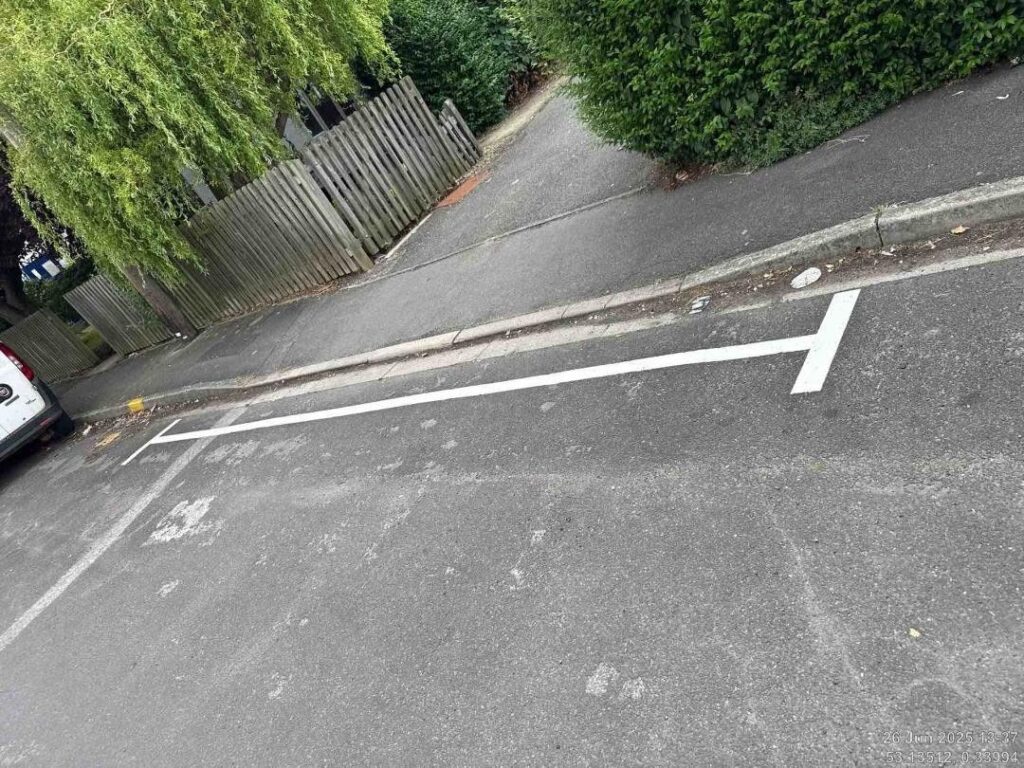
H-Bar markings – long white lines with small bars at each end – are not legally enforceable but are used to try to advise people to avoid parking outside a particular home or business or near to a dropped kerb or crossing, writes Local Democracy Reporter Oliver Castle.
Lincolnshire County Council currently pays to put these markings down – at a cost to the authority of £25,000 a year – but is now looking to change this.
It says some councils are already charging for the service.
At an LCC highways and transport scrutiny committee meeting on Monday, September 14, Coun Charlotte Vernon (Conservative – Colsterworth Rural) argued that the proposal could be ‘discriminatory’ towards disabled people.
She said: “For them to have to pay for £400 to ensure that they can get out and in of their property, I think is wrong. I also feel £400 seems extremely high.”
She added: “I would like to propose that there is an exemption for blue badge, or at the very least, a significant reduction in the cost of £400, because I feel this policy will discriminate against those who do need them for mobility reasons.”
Under the plans, an online application process would be developed which would enable people to apply and pay for a H-Bar marking and officers would consider the applications and decide whether a marking is necessary.
It would cost £400 to apply for a marking to be installed at any location in Lincolnshire – and officials said the proposal will help to reduce officer time spent on assessing the applications, reduce the costs on the council and speed up the process in the markings being installed.
The council said it will not make any profit from the proposed charge and the money generated will cover the costs of the contractor carrying out the work and officer time to process the applications.
Coun Richard Wright (Conservative – Ruskington) aired concerns that an online application system could lead to officers undertaking fewer site visits and mean that the applications are not being properly assessed.
He said: “If this stays that we don’t have site visits and actually it’s just a self-service system, then I’m afraid I’ll be voting against this because I think what will happen is we’ll have people that can afford will be applying and they’ll be applying regardless of whether it’s the right thing to do – because they just want an H-Bar and if they pay the money they’ll get it.
“That’s the way they’ll see it and that will just potentially lead to even more arguments, especially where we’ve got some of our traditional villages with narrow roads – and you’ll end up with a situation I’ve got in one of my villages and even today is still causing friction.”
Adam Round, head of design services at LCC, said that the proposed online application form would provide a central location and a more ‘standardised process’ for officers to review applications for H-Bar markings.
Nicole Hilton, assistant director of communities at LCC, said: “I think it’s important to note that H-Bars are not legally enforceable – they’re advisory.
“I absolutely get and understand that they do cause some issues, but having one outside your house is more about an advisory situation because they’re not legally enforceable.”
The committee resolved for LCC officers to go away and produce a more detailed report in response to the members’ concerns and the committee will consider the proposal again at a meeting at a later date.