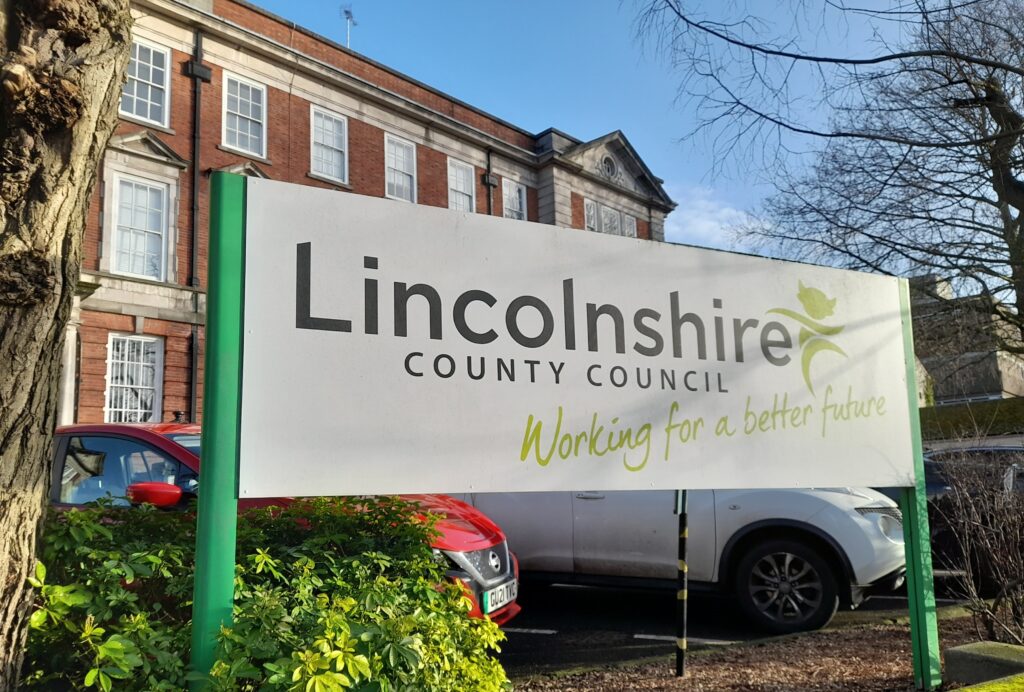
New figures reveal that Lincolnshire County Council is predicted to face a £42 million funding shortfall next year.
A BBC Shared Data Unit investigation has found that Lincolnshire County Council (LCC) is projected to face a budget gap of more than £40 million in the 2027/28 financial year – with officials saying they’re facing rising costs and demand for services, writes Local Democracy Reporter Oliver Castle.
The investigation found that councils across the UK are facing similar cost pressures, with many having to consider making cuts to some services and increase the charges for others.
Pam Clipson, head of financial services at LCC, said: “This year, despite cost pressures of more than £80m, we set a balanced budget in February.
“Alongside the 2026/2027 budget, the medium-term financial plan identified further cost pressures of more than £50 million for 2027/28, however an overall budget surplus.
“Like many organisations across the public and private sectors, the council continues to experience rising costs and increasing demand for our services.
“These pressures will be closely monitored and reflected through the council’s regular budget monitoring arrangements and the budget-setting process for the year ahead.”
The BBC Shared Data Unit investigation also found that councils across the UK will need to plug a combined £3.8 billion budget gap by the end of next year, despite planning £3.2 billion of savings in 2026-27.
The study examined 212 of the 218 upper tier authorities in the UK, including LCC.
The findings revealed that some councils across the country are considering measures such as slashing bus routes, cutting support for children and young people and closing some leisure facilities, while also ramping up charges for garden waste and parking.
Jonathan Carr West is chief executive of the Local Government Information Unit – an independent local government think tank. He said that many councils were facing increased cost pressures.
He said: “It’s sad to say these results are not hugely shocking in that they paint a picture of a sector that is perilously close to financial collapse.
“That was the case last year and the year before that. I think we see some of the changes the Labour government have made since 2024 have sort of slowed the rate of decline in local government finance.
“If we’re all marching towards a cliff edge, they’ve sort of slightly slowed down that progress, but they haven’t fundamentally changed its direction.
“We’ve seen some important improvements, multi-year financial settlements, a review of the funding formula, fair funding 2.0, as they called it.
“But we also see very clearly in the results, many of those councils who were worried about the impact of the fair funding, particularly London boroughs, are the very councils that are talking about having to make the biggest amount of savings per head, the very councils that are identifying the largest budget gaps.”
Mr West went on to say that the costs of key services such as adult social care, children’s services were the key drivers behind these cost pressures and account for ‘nearly 80 per cent’ of the budget of most big councils.
He also warned that many councils could be on the ‘brink of collapse’ if this situation continues.
A ministry of housing, communities and local government spokesperson said: “We’re making £78 billion available to local authorities across the country this year through our fair funding settlement – and thanks to our changes nine in ten councils in England will receive funding that matches their relative need by the end of 2028/29.”