Wildlife experts at Vine House Farm say they disagree with a charity’s plea for garden owners to stop feeding birds during the summer months.
The RSPB has this week urged people not to feed birds so much between May 1 and October 31.
“Research has shown a worrying decline in some of our much-loved garden birds due to a disease called trichomonosis,” a spokesman for the charity said. “This is a highly contagious disease and can spread where birds gather in large numbers such as at bird feeders.
“Greenfinches, for example, have dropped by over 65 per cent in the last three decades – and you may have seen this decline yourself.
The charity has called for a pause on filling bird feeders with seeds or peanuts and only puttingout ‘small amounts of mealworms, fatballs or suet’.
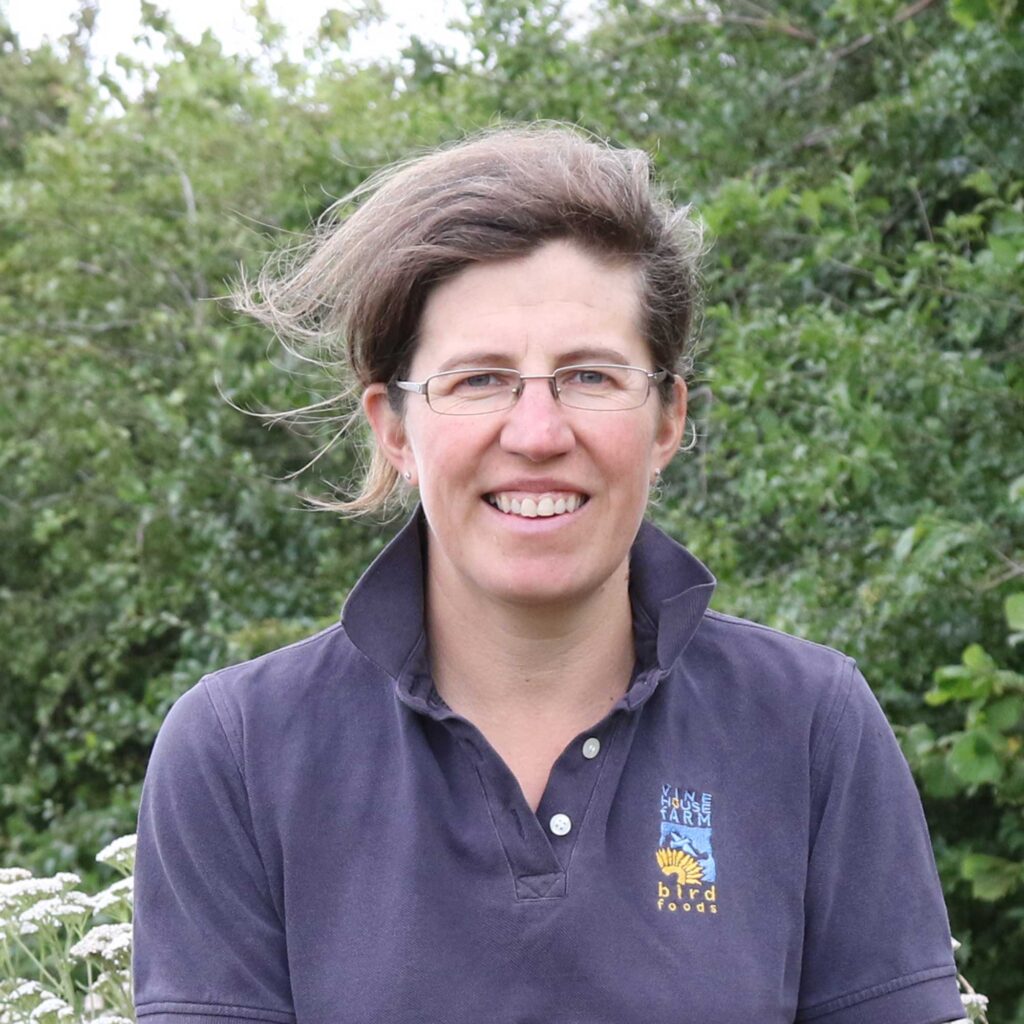
Vine House’s Lucy Taylor says it was involved in the consultation the RSPB held before the announcement, but that she doesn’t agree with it.
“We provided the RSPB with a solid case saying why this would be the wrong thing to do,” she said. “This came about because of our partnership with the BTO (British Trust for Ornithology), who were working with the RSPB on their review of supplementary feeding for garden birds, and specifically its role in disease transmission for species of finch.
“The review and the science used, is reasonably comprehensive and robust – although all parties accept that more work needs to be done.
“However, here at Vine House Farm, we believe that the RSPB’s solution to reduce disease transmission is not the right one for the following reasons:
“Our own research carried out over many decades at our farm, demonstrates a huge benefit to breeding populations of some species of songbird because of supplementary feeding of seed – especially during May and June.
“The drastic reduction in natural insect food which we’ve progressively seen over the last 50 years, means there is a real ‘food gap’ during the breeding season.
“There’s also far less natural seed available because of losing virtually all our historic wildflower meadows, plus more generally as a result of intensive farming.
“So, by also removing food provided in gardens, it is very likely to reduce the levels of breeding success in some songbird species.
“The issue of disease transmission in birds is not just because of garden feeding, but what practices are adopted.
“We’ve long advocated very strict hygiene and other measures such as frequently moving feeders around, all of which help reduce the problem.
“Many people will still feed the birds with seed in their gardens during the spring and summer, but because only some will take the RSPB’s advice, there will inevitably be a much greater concentration of birds on feeders in gardens where they remain. This will logically then result in an increase of disease transmission at a local level.”