
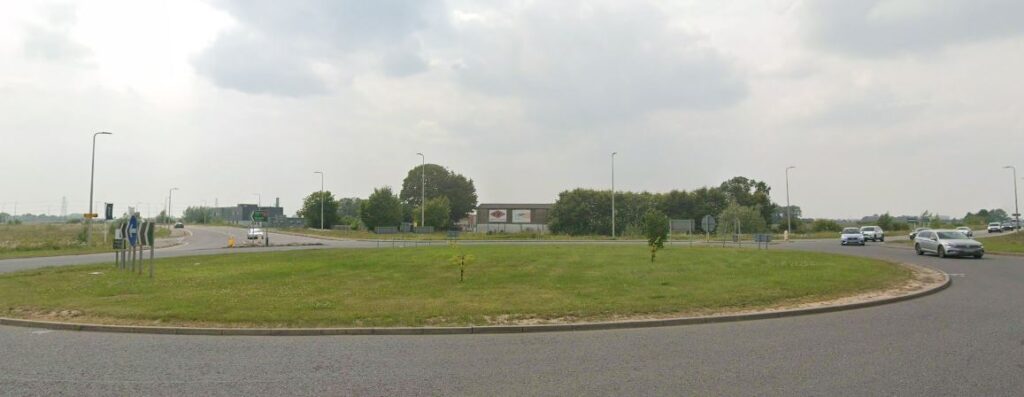
A £1.24m resurfacing of the A17 and A151 in Holbeach looks set to go ahead in September.
Lincolnshire County Council is looking to undertake the work as there is ‘extensive material failures in the surfacing.’
A report is to go before the county’s highways scrutiny committee next week when tenders are returned.
The schedule of works will be around 12 weeks to allow completion of repairs to ‘these strategically important corridors.’
If a contract is not awarded for the repairs, there would be the “inevitable consequence that the road condition will continue to deteriorate, with deeper structural failures and ultimately result in a larger cost of future repair,” the report adds.
“Many of the defects at this site are more than superficial, requiring deeper treatment to effectively repair them and achieve the desired longevity.”
Superficial repairs would only last temporarily and are not cost-effective.
“The cost of traffic management for repeated visits to patch the A17 and A151 are disproportionate for the benefit achieved,” the report adds.
Three areas are included in the project – A17 Stockwell Gate for 700m, A17 Fleet Hargate for 450mm and A151 Holbeach for 550m.
Work will take place overnight from 8pm to 7am and will last tor three months from September 8 or 9.
Traffic will be managed by road closures with a signed diversion. The road will be open outside of working hours.
As a hierarchy 1 carriageway, the highest county road denomination, it has been assessed and scored using a range of criteria.
“The score created from this data is logged and correlated against all other hierarchy 1 carriageways. Those that score the highest are in the greatest need of intervention to arrest their deterioration and are promoted to become resurfacing projects. Holbeach and Fleet Hargate are among the highest scoring sites and therefore entered into this year’s list of priorities for resurfacing,” says the report.
“LCC is acutely aware of the risks associated with artificially low pricing and is experienced in identifying abnormally low tenders that may not be sustainable or credible in delivery.
“Tender evaluations will therefore include a scrutiny process to test the realism and robustness of pricing, ensuring that bids represent the true value and do not compromise the integrity or successful deliver of the project,” the report adds.