There are some birds which everyone knows by sight.
The robin on our Christmas cards, the elegant swan, the town pigeon. But there are rather fewer that people know the sound of.
The cuckoo is one, or the quacking of a duck. And of course the owl, which goes “Twit-twooo”. But does it?
It may surprise you to learn that in and around Spalding there are several different types of owls, each with their own call and habits.
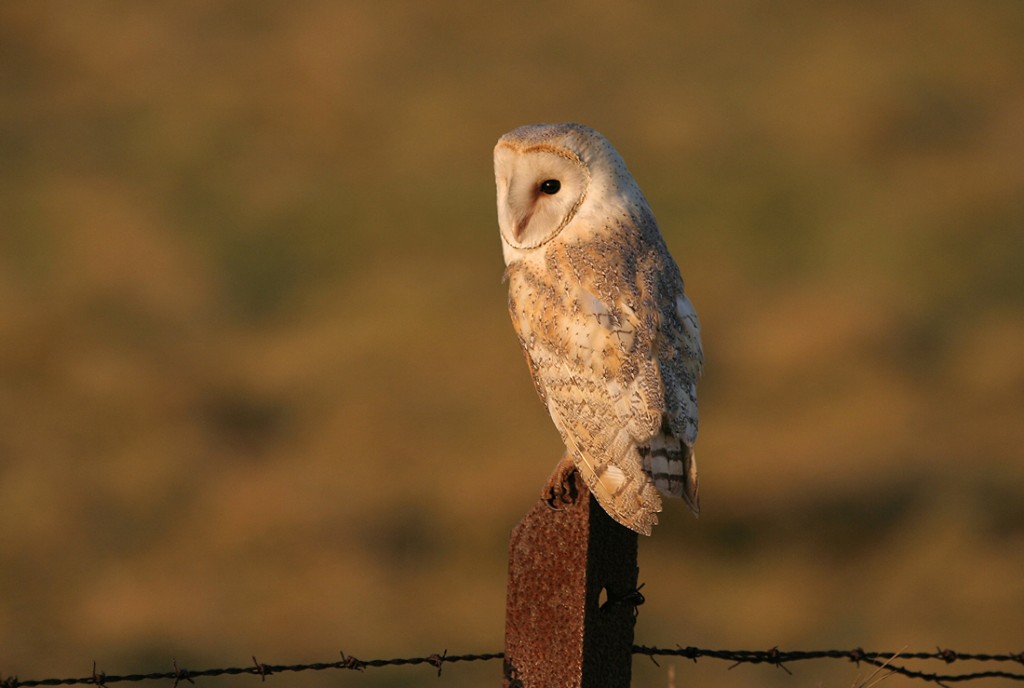
The most familiar of these is the barn owl.
With all our arable fields, this is a great part of the country to see them.
You are most likely to spot one as a ghostly white shape in your car headlights, hunting alongside the road.
The grass verges have an abundance of the mice and voles that they like to eat.
Barn owls mostly hunt during the night. But short eared owls are quite different. They are daytime hunters, flying low over rough ground such as the saltmarsh at RSPB Frampton Marsh.
This is a great time of year to see them too, as extra birds are arriving in the county from Scotland and Scandinavia.
They look rather larger than barn owls, with staring yellow eyes. The ‘ears’ in the name aren’t ears at all really, but tufts of feathers that are almost invisible, except when the bird is excited.
But neither of these owls goes “Twit-twooo”. That sound is made by a pair of courting tawny owls.
These are quite chunky brown owls, night-time hunters which live in woods, parks and gardens.
They start their courtship in November, prior to making their nests in February.
But you do need two owls for the full noise. The female says “Twit!” and the male goes “Who?”
Listen out for them tonight!
by Dr Chris Andrews,
Visitor Experience Manager
RSPB Frampton