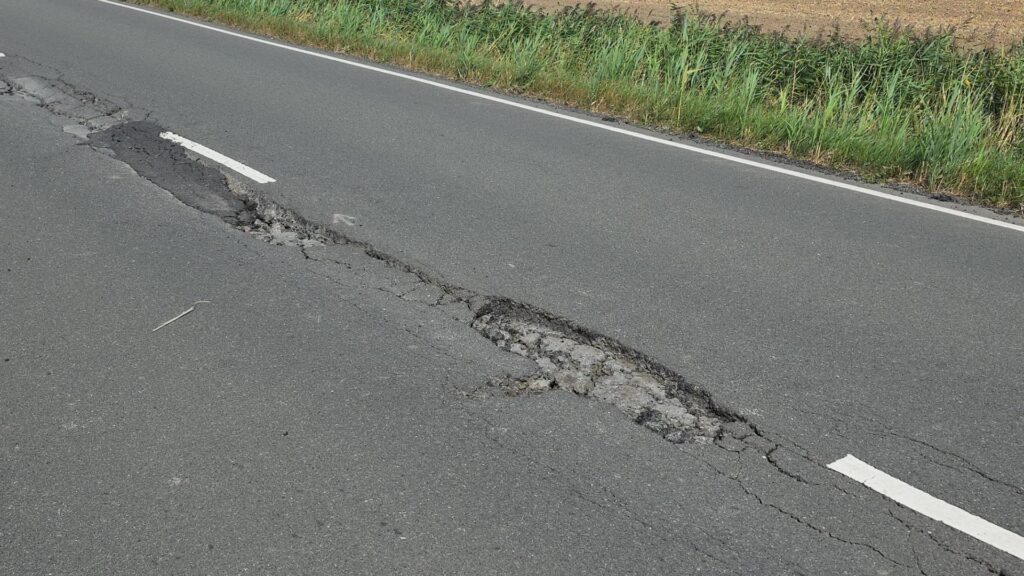
Roads across Lincolnshire suffered one of their worst-ever years for drought damage in 2025, thanks to a record-breaking lack of rain.
The county’s road network “wasn’t designed to withstand this level of drought-induced stress”, Lincolnshire County Council has said, writes Local Democracy Reporter Jamie Waller.
Even A-roads – which are typically built to be more resilient to weather conditions – have cracked and moved.
Barrier Bank in Crowland has been closed since September due to the extent of damage.
Repairs, including crack sealing and patching, have been carried out on some roads and temporary speed limits have been installed.
The council says that seriously damaged roads are being assessed and will likely require “full reconstruction and substantially higher investment.”
Many of Lincolnshire’s roads are built on clay or alluvial soils, which shrink as they dry, and can cause subsidence in the highways above.
The county council has argued to the government that it needs extra funding to account for this problem.
Councillors will discuss the issue at a Highways and Transport Scrutiny committee meeting next week (December 15).
“The summer of 2025 has been one of the driest on record, resulting in soils drying out, shrinking and causing significant movement and cracking across Lincolnshire Highways,” a report says.
“The Lincolnshire highways network was not originally designed to withstand this level of drought-induced stress, especially on smaller B-roads and unclassified roads where the evolved road network depths are less.
“Due to the extent of this year’s drought, movement and cracking has also developed on some A roads, which historically have been more resilient.”
Lincolnshire County Council initially hoped it would be able to make temporary repairs to Barrier Bank and reopen the road.
However, it was discovered that the damage was worse than previously thought, and a full investigation is taking place into the possible options.